
1. Ancient Roots: The Beginning of Carpet Weaving in Ardabil
Carpet weaving in Ardabil has a long history dating back over 1,500 years. The region’s unique geographical location, serving as a bridge between northern, western, and central Iran, allowed this art to merge with diverse cultures and achieve unparalleled richness. Even before the advent of Islam, textile and weaving industries flourished in Ardabil, laying the first foundations of artistic carpet weaving.
2. Safavid Era: The Golden Age of Ardabil Carpets
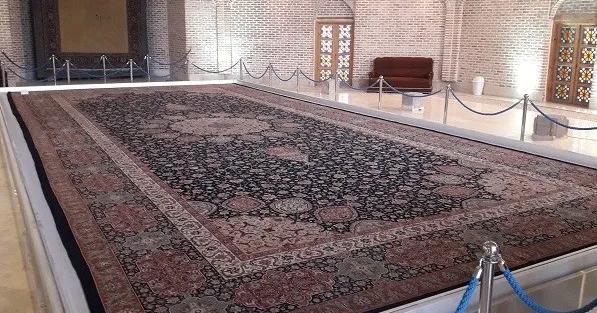
The Safavid period undoubtedly marks the peak of Ardabil carpets. With unprecedented royal support, the art of carpet weaving reached its highest level. Large, intricate, and exquisite carpets were woven in the royal workshops of Ardabil. The masterpiece of this era is the famous Sheikh Safi al-Din Ardabili carpet, now housed in the Victoria and Albert Museum in London, considered one of the most valuable carpets in the world.
3. Distinctive Features of Historical Ardabil Carpets
Safavid-era Ardabil carpets were distinguished by:
- Complex geometric and floral motifs
- Natural dyes with deep, vibrant color palettes
- Fine, dense knots ensuring durability
- Large dimensions and perfectly symmetrical designs
These features made Ardabil carpets unparalleled compared to other carpets of the period.
4. Contemporary Era: Challenges and Revival
After the fall of the Safavids, carpet weaving in Ardabil experienced a relative decline. However, during the Qajar and Pahlavi periods, local artisans and carpet merchants revived this art. Today, a new generation of Ardabil weavers, inspired by this rich heritage and using modern design and marketing techniques, is restoring the former grandeur of Ardabil carpets.
5. Ardabil Carpets on the Global Stage Today
In the modern world, Ardabil carpets are valued internationally for their authentic designs, high quality, and artistic worth. They are not only displayed in museums and private collections but also recognized as reliable art investments.
Conclusion:
The history of Ardabil carpets is a story of glory, pride, and revival. It is the story of a city where the unparalleled artistry of its people has preserved centuries of Iranian culture and beauty in the warp and weft of its carpets. With a brilliant past as its foundation, the future of this craft looks brighter than ever.